


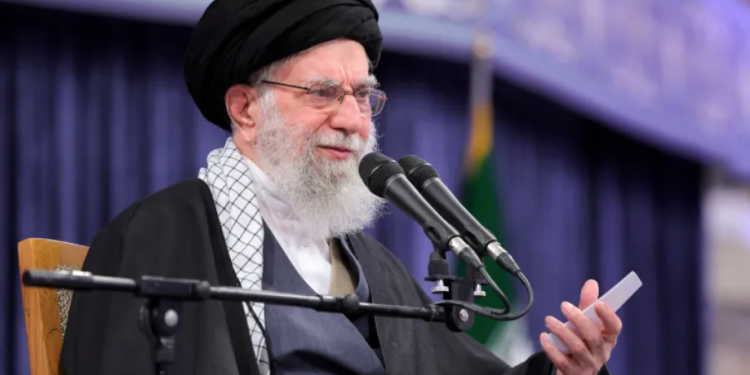
Iranian state media have confirmed that Supreme Leader Ayatollah Ali Khamenei has been killed following joint US-Israeli attacks on Iran, ending days of conflicting reports about his fate.
According to official announcements on Sunday, Khamenei was killed at his office during the strikes. Authorities have since declared a 40-day national mourning period for the longtime leader, who had ruled Iran since 1989.
The confirmation follows earlier reports by Iran’s Tasnim and Mehr news agencies, which had initially stated that Khamenei remained “steadfast and firm in commanding the field.” Those claims were later contradicted by statements from US and Israeli officials.
US President Donald Trump earlier wrote on his Truth Social platform that the 86-year-old leader was killed in the coordinated strikes that began early Saturday. Trump said the operation was carried out with Israel using what he described as advanced intelligence and tracking systems, adding that the development presented “a chance for the Iranian people to take back their country.”
Israeli Prime Minister Benjamin Netanyahu had also said there were “growing signs” that Khamenei had been killed. Separately, the Reuters news agency cited an unnamed senior Israeli official as saying Khamenei’s body had been located.
Khamenei succeeded Ayatollah Ruhollah Khomeini, the architect of Iran’s 1979 Islamic Revolution. As supreme leader, he wielded ultimate authority over the government, military, judiciary, and served as the country’s highest spiritual figure.
Analysts say Iran had long prepared for such a scenario. Barbara Slavin, a distinguished fellow at the Stimson Center, told Al Jazeera that contingency plans were likely already in place, including the possible formation of a leadership council to oversee the country.
Strikes and Escalation Fears
Saturday’s attacks reportedly hit targets across 24 Iranian provinces, killing at least 201 people, according to Iranian media citing the Red Crescent. Among the dead were civilians, including children, following strikes on schools in Minab and areas near the capital, Tehran.
Netanyahu said Israel had eliminated senior figures within the Revolutionary Guard and Iran’s nuclear programme, vowing that the attacks would continue. Trump also signalled sustained military action, warning that “heavy and pinpoint bombing” could continue for days.
Iran responded with retaliatory strikes, triggering air-defence interceptions in countries hosting US military assets, including Kuwait, Qatar, the United Arab Emirates and Bahrain. The Islamic Revolutionary Guard Corps said multiple waves of counterattacks were underway.
Global Reaction
At an emergency meeting of the UN Security Council, UN Secretary-General Antonio Guterres called for immediate de-escalation, warning that the conflict risked spiralling out of control.
Iran’s UN ambassador, Amir Saeid Iravani, accused the US and Israel of launching an unprovoked and premeditated war, while the US ambassador, Mike Waltz, defended the strikes as lawful, insisting Iran must not be allowed to acquire nuclear weapons.
China’s ambassador Fu Cong expressed deep concern over the escalation, while Russia’s envoy Vassily Nebenzia condemned the attacks and demanded an immediate halt.
Khamenei’s death now marks a historic turning point for Iran and the Middle East, with uncertainty mounting over Iran’s leadership succession and the risk of a broader regional conflict.