


John Dramani Mahama has announced that the newly created 24-Hour Economy Authority will spearhead what he calls a productivity revolution in Ghana’s manufacturing and industrial sectors.
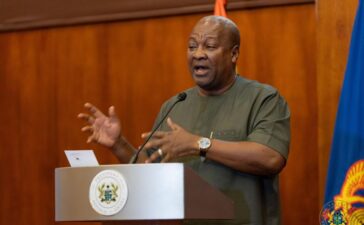
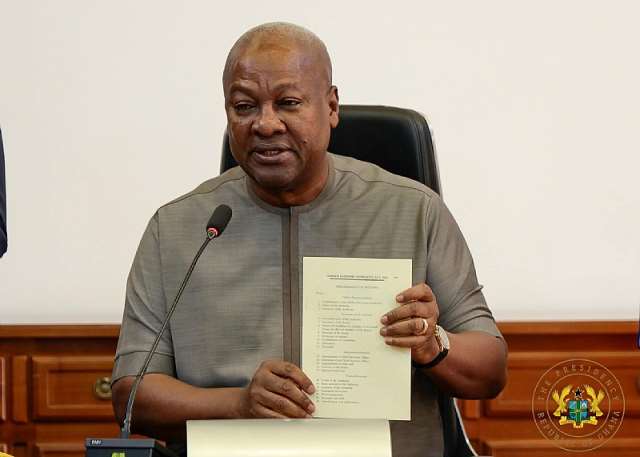
Speaking at the Presidential Dialogue with the Private Sector in Accra, the President said the policy is designed to ensure continuous production across key industries, allowing factories to operate three shifts daily to maximize capital, infrastructure, and labor.
He emphasized that Ghana cannot accelerate industrial growth if costly machinery and factory plants remain idle for long hours. Transitioning to a 24-hour production model, he explained, would boost output, lower unit production costs, and improve the competitiveness of Ghanaian products both domestically and internationally. Productivity, he noted, must become the next phase of Ghana’s economic transformation.
To facilitate the shift, President Mahama outlined a package of incentives, including operational support for shift systems, off-peak electricity tariffs to reduce nighttime energy costs, enhanced industrial security, and targeted tax exemptions on machinery and equipment for factory expansion.
He added that the Authority would collaborate closely with key ministries, the Bank of Ghana, and investment promotion agencies to remove bureaucratic obstacles that slow industrial development.
The President further highlighted that the initiative complements Ghana’s strategic role under the African Continental Free Trade Area, headquartered in Accra. Expanding round-the-clock production, he said, will enable local manufacturers to serve regional markets, scale up exports, and compete more effectively across West Africa and beyond.
Reassuring the private sector of policy stability, reliable power supply, and infrastructure support, he urged businesses to expand operations, invest in skills development, and uphold high production standards.
“The Ghana we seek will not be built by rhetoric,” he stated. “It will be built by factories operating at scale—day and night—producing for Ghana, Africa, and the world.”