




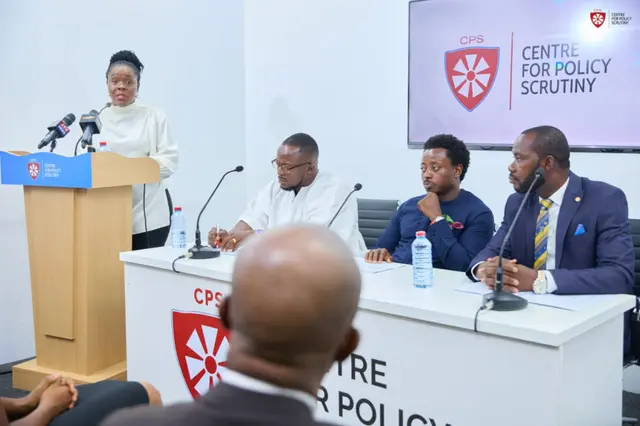
A new study by the Centre for Policy Scrutiny (CPS) projects that Ghana could lose GH¢18.15 billion in government revenue by 2027 as a result of abolishing several major levies, including the Electronic Transfer Levy (E‑Levy) and the Covid‑19 Health Recovery Levy. The findings were presented at a public lecture organised by CPS on Tuesday, April 7, 2026, highlighting concerns over the long‑term impact of recent tax changes.
According to the CPS analysis, the removal of the E‑Levy is expected to result in a cumulative revenue loss of about GH¢8.2 billion by 2027, while the Covid‑19 Health Recovery Levy could cost an additional GH¢9.95 billion over the same period. Together, these contribute to the projected GH¢18.15 billion shortfall.
CPS fiscal policy specialist Isaac Danso Agyiri said while the levies’ removal may offer some relief to households and businesses, the fiscal implications are substantial and demand careful consideration.
“The projected GH¢18.15 billion revenue loss is significant. Without well‑designed compensatory measures, this could create additional pressure on public finances and affect the government’s capacity to meet its expenditure commitments,” Mr Agyiri said.
The study also noted that the E‑Levy, introduced in 2022 as a way to broaden the tax base through digital transactions, and the Covid‑19 levy, which had become a stable source of revenue within the consumption tax framework, both contributed meaningfully to domestic revenue mobilisation prior to their abolition.
Beyond revenue concerns, the report found that the structure of these taxes raised equity questions, particularly around the burden they placed on low‑ and middle‑income earners who rely heavily on mobile money services. However, Mr Agyiri cautioned that the fiscal gap created by scrapping these levies cannot be ignored.
The CPS analysis comes amid ongoing debates over public finance strategy, with some tax experts urging policymakers to balance the need for economic relief with sustainable revenue mobilisation. Proposed measures to offset the projected shortfall include broader VAT reforms and improved compliance efforts, though there is no guarantee these will fully counterbalance the losses.
The lecture, which drew fiscal analysts, academics and civil society members, underscored the need for careful policy design and public engagement on tax issues that affect national development and fiscal stability.